How To Use Magnolia Seeds

magnolia seeds StumpBustersLLC stump removal

Magnolia seeds are seen on a magnolia tree and they are a bright red color. They appear on cone-shaped fruit that the tree produces and magnolias are perhaps the most primitive type of flowering plant. They are known as angiosperms and this means that the seeds are enclosed in the fruit. When the fruit ages, scaly areas appear and it splits apart. This exposes the bright red magnolia seeds. Songbirds love these seeds and they are nutritionally beneficial for them. But there are other reasons why people enjoy these types of trees so much.


All different sizes


The magnolia tree can grow to reach 30 feet in height. But there are over 30 different species of this plant and some are smaller and can be used for shrubbery. It is an evergreen type of plant which means that it can live and thrive through the toughest of winters. It can be placed in areas where the temperature goes below freezing for a long period and still produces a rich green color. In mid-spring the tree produces colorful blooms that are white to near white, pink and purple. The flowers start in a tighter bud form and as they bloom they produce saucer-shaped flowers.


When they start to bloom


The longer thin oval-shaped petals slowly bloom to create these beautiful flowers. During the spring when the flowers bloom on the tree, it can be difficult to see any leaves or foliage. This can add a big splash of color to any garden area as well as a pleasant fragrance. But without a doubt, the most interesting thing about a magnolia tree is the magnolia seeds.


magnolia seed pod StumpBustersLLC stump removal

In early fall the tree changes considerably. Blooms are long gone but a new color emerges from the magnolia tree. Then the tree becomes laden with magnolia seeds and they are assembled in seed pods. As the plants mature the color can become richer and more visible. This immediately attracts songbirds and squirrels to the tree. Occasionally, the magnolia seeds that are produced overcome the tree and the pods explode. This leaves a blanket of rich red color on the ground underneath the tree. It is easy to get to these seeds so that you can use them again to plant more trees.


There are tiny silk-like threads attach the seeds to the pod and most magnolia trees are started from the seed. But if you do use a seed, do not expect the same type of blooms as the original. It can be changed by haphazard pollination.


https://www.youtube.com/watch?v=nZLzpyfrOig

Harvesting the Magnolia seeds


While gathering magnolia seeds, you should never let them dry out. The best time to do this is when the seeds are most visible or right after a pod burst. You will have to soak the seeds in water for at least 2 days to remove the red coating. They cannot be stored if the coating is on the seed. Gently clean the magnolia seeds with dishwashing liquid to remove the oily substance because it will not allow the seed to absorb water. Cover the seeds with compost to maintain moisture levels and they should germinate in 4 to 6 weeks. You can pot the seeds after 4 weeks.


You may not want to plant the tree in excessively cooler temperatures. Early spring is the best time to plant them and make sure not to damage the roots if you are removing them from a pot or planter. It helps to plant them on a slight hill, so that the delicate roots do not become water damaged. As the plant matures and the roots become established, you can even the soil back out around the plant. StumpBustersLLC


Watering Your Landscape Correctly

happy dog StumpBustersLLC stump removal watering your landscape

Proper watering of your landscape is the most important cultural practice there is to maintain the health of your plants. Yet many people do not give it the importance it deserves. No amount of fertilizer or any other practice will improve the quality of your landscape if it does not receive proper irrigation. Overwatering a landscape here in Pennsylvania is the most common mistake homeowners make.


Here is the rule of thumb when checking your landscape soil for proper moisture:


Every master gardener and landscaper will tell you the only sure way to know if a landscape is getting the proper irrigation and drainage is to dig down adjacent to the root system roughly 6-8″ deep and grab a handful of soil. It is best to do this 2 days after a rainfall before checking the soil moisture so the heavy rains haven’t thrown off your evaluation. Squeeze a handful of soil and observe the moisture. If the soil holds together like a cast of your palm the moisture level is good. When it crumbles after opening your hand it’s too dry. Does water drip out of your hand ? Then it is too wet and could cause your root systems to suffocate.


Horticulturally root systems need to breathe just as much as the leaves and needles do. Saturated soils will cause Root Rot which is a severe plant disease that can be treated with a soil fungicide called “Cambistat” but at the least your plants could also experience chlorotic responses to a root system that can’t keep photosynthesis and carbohydrate production on schedule.


What you need to know about your sprinkler system


Most professional sprinkler companies install similar types of nozzles on their mist heads that are generally consistent. Knowing that most of these nozzles are capable of spraying 3 gallons of water per minute we recommend that a mist head zone is set to run for 6 minutes which equates to 18 gallons of water being applied around each nozzle. If 5 mist heads are on that zone you have now applied 90 gallons of water. Many homeowners run their landscape mist head zones for 10-20 minutes! Check the coverage and observe if the overlap is too much or too little.


perfect lawn StumpBustersLLC stump removal watering your landscape
StumpBustersLLC

Setting the landscape sprinkler system for established landscape plantings


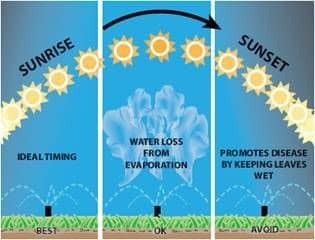
Never water your landscape in the evening or at night. Plant diseases begin to occur rapidly when moisture sits on plant foliage for at least 4-6 hours. In Lancaster County, your landscape only requires a thorough watering 2 times a week when temperatures are in the 70′s. When temperatures reach 85 degrees we then suggest watering 3 days a week. The below-listed guidelines are suggested as a starting rule for your landscape system when the temperatures are above 75 degrees.


Set landscape mist head zones between 6-8 minutes per zone


Set the days to water for just 2 days a week with a couple days between each watering.


If rain is expected turn your sprinkler clock to “rain delay”. Rain sensors don’t always work as they should and your plants are too valuable to let them drown.


when to water your lawn StumpBustersLLC stump removalwatering your landscape" class="wp-image-748" width="643" height="490"/>
Setting the landscape sprinkler system for newly planted landscapes


Please do not water your new landscape as you would water new sod. It is important to note that tree root balls are much harder to saturate then the shrub root balls which have been grown in light container soil. Tree root balls usually contain a lot of clay for the stability of large root systems. Watering the entire landscape to saturate a tree will end up drowning the shrubs or conversely, watering the shrubs lightly and regularly will hamper the trees ability to establish and thrive. Use your sprinkler system for the shrubs using the same sprinkler settings that are listed above for established landscapes and lay a hose at the base of your trees where water can slowly saturate.


Watering those annual flowers


I know everyone enjoys watching the water spray the flowers. It’s a fun thing to watch and can be reassuring to know they look like they are getting enough but overhead sprays generally water to vast of an area and end up drowning nearby plants. We suggest running soaker hoses at least however the best way is to install drip irrigation which conserves water far better than soaker hoses and mist heads. You can run your lines separately twice a day instead of utilizing a full 10 head mist head or lawn zone. StumpBustersLLC

Facts About the Tulip Magnolia Tree

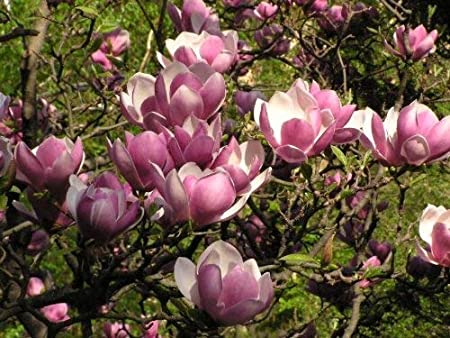
tulip magnolia www.stumpbustersllc.com stump removal

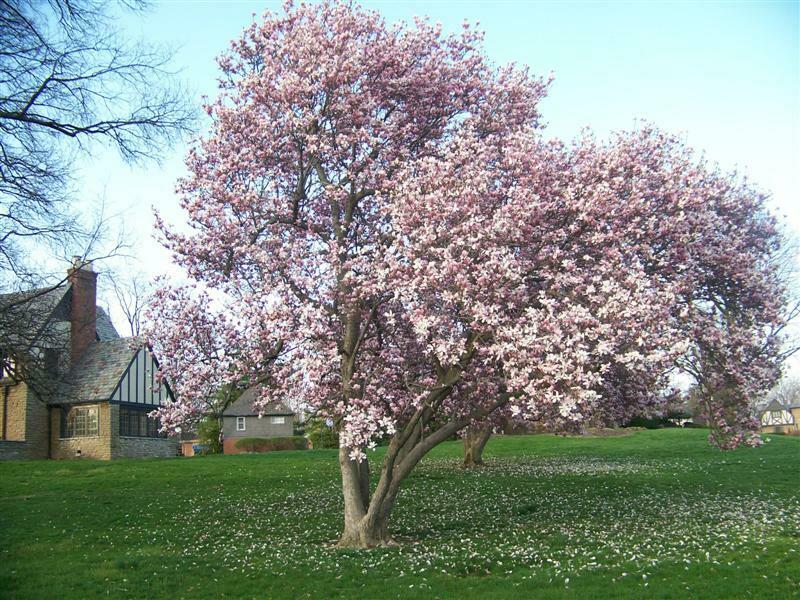
The Tulip Magnolia Tree is a marvelous tree planted for its ornamental value. Its scientific name is Magnolia Soulangiana. It’s often also called the Saucer Magnolia due to the saucer shape of its flowers. There are several varieties, but they are all very spectacular and similar in growth characteristics. This tree is deciduous, meaning that it loses its leaves and hibernates during the winter, with new buds of leaves and flowers forming each spring.


This tree prefers southern and warm climates that receives plenty of rainfall each year. In many southern yards, the tulip magnolia stands as an anchor plant and centerpiece of the landscape. The reason that this tree is not found in more northern climates is that it flowers early in the spring before the leaves unfurl. These early and beautiful flowers are very susceptible to frost. A late frost will kill the flowers, but not necessarily the tree, but the flowers are the main reason for wanting this tree in your yard in the first place.


The blossoms are where this tree shines


The blossoms of the Tulip Magnolia are four to eight inches long or even more. The flowers are tulip-shaped and that is where the tree gets its name. The flowers are showy and the petals will be light pink to purple. The leaves are also very large ranging in size from four to six inches long. They form in a bud and then unfurl after the tree has blossomed at nearly their full size. The leaves are green on top and more pale and fuzzy underneath. The flower buds are fairly large, whereas the leaf buds will be smaller and fuzzy.


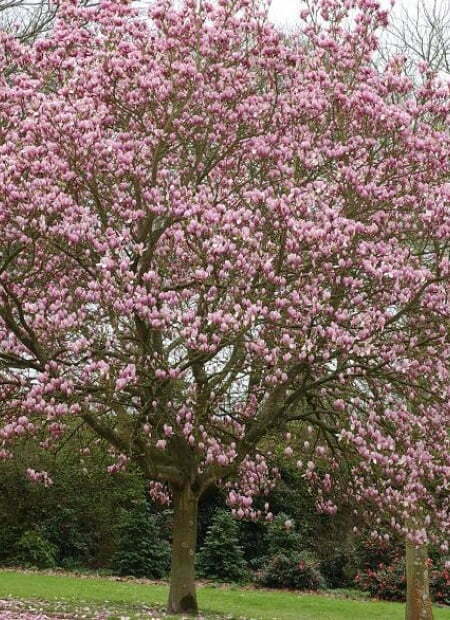
tulip magnolia tree www.StumpbustersLLC.com stump removal

The blossoms of the Tulip Magnolia are four to eight inches long or even more. The flowers are tulip-shaped and that is where the tree gets its name. The flowers are showy and the petals will be light pink to purple. The leaves are also very large ranging in size from four to six inches long. They form in a bud and then unfurl after the tree has blossomed at nearly their full size. The leaves are green on top and more pale and fuzzy underneath. The flower buds are fairly large, whereas the leaf buds will be smaller and fuzzy.


Not a difficult tree to maintain


The Tulip Magnolia tree has multiple trunks and has low branches. The low branches and multiple trunks make this tree a favorite for kids to climb. The bark is fairly smooth and has a mottled gray color to it. It grows to a height of about 20 to 30 feet. Experts advise homeowners to trim the tree to keep it under 20 feet. Trimming and pruning allows you to shape the tree as well as better manage its growth before it becomes overgrown. It also will keep your kids from climbing to even greater heights.


The tree will grow at a moderate rate and it likes moist soil that drains well, where its roots can grow deep. It can tolerate moderately acidic soil and fertilizer is rarely needed. It also prefers to grow in a location with full sun in hardiness zones 4-9. The tree’s roots are fleshy and grow deep in search of water. This makes the tree difficult to successfully transplant.


tulip magnolia tree 3 www.StumpBustersLLC.com stump removal

The tree has no autumn color to speak of, but the amazing colors of the spring blossoms more than makeup for that. It bears a non-edible fruit that is shaped a little like a cone. The fruit matures in late summer. During that time, even though the fruit is not something you can enjoy, you can enjoy the shade. The leaves are ample and large which will provide you plentiful shade to enjoy your days.


Where to plant ?


It’s best to plant this tree as part of a total landscaping plan. It should not be planted in an area where other trees or plants will take away its glory. This tree begs to be fully visible to show off its colorful flowers and large leaves. It should be planned to be a centerpiece or to be placed at a fence corner. Also consider that this tree will offer shade below it. You can use it to shade a less sun tolerant flower garden that will complement the stateliness of the tree. You could also use the shade as a place to sit and enjoy your landscape. StumpBustersLLC

A Few Facts About The Sweetbay Magnolia

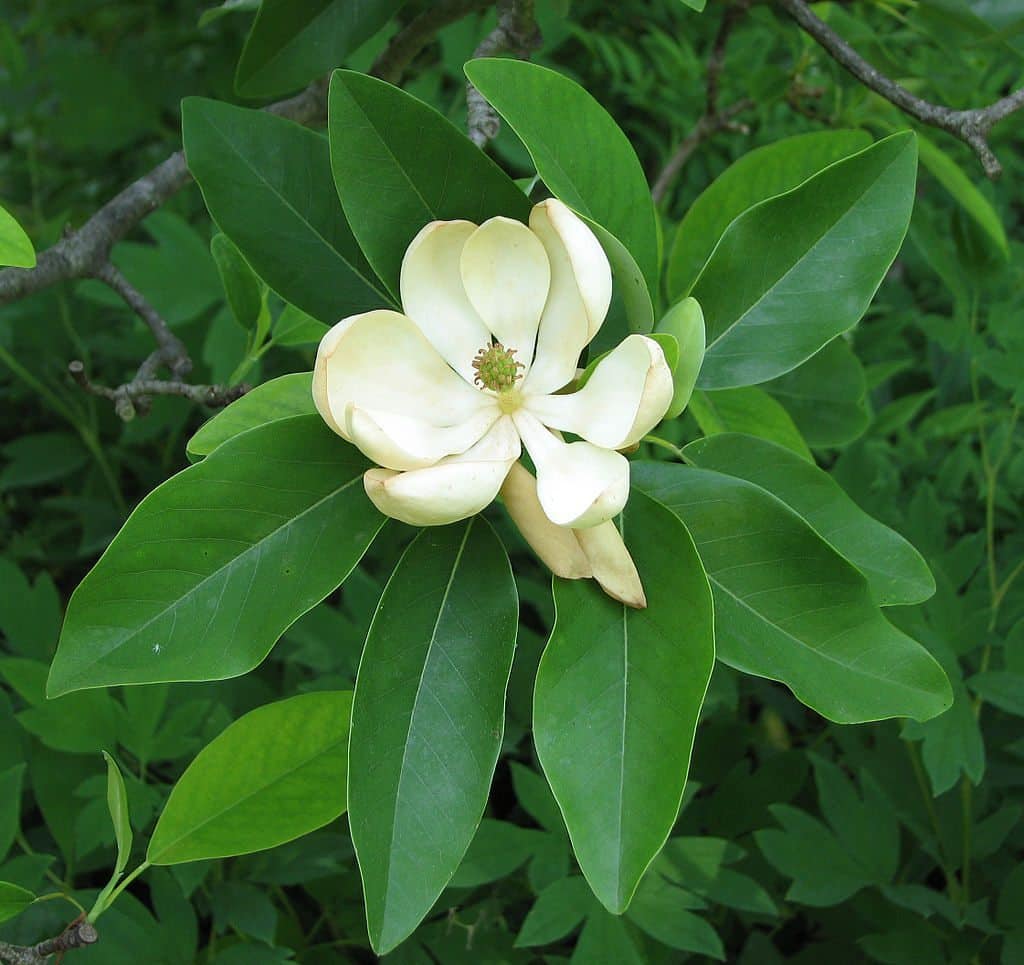
Like most magnolia trees, the Sweetbay Magnolia (Magnolia virginiana) is noted for its creamy white to nearly white flowers,which are set against a backdrop of shiny dark green leaves. When in bloom during late spring and early summer,the tree gives off a light vanilla scent, which many owners of the tree say is more pronounced in the early morning hours. Some describe the fragrance as having somewhat more of a light lemony scent.


sweetbay magnolia - StumpBustersLLC - stump removal
stumpbusterspa@gmail.com

Hardiness Zones


Its botanical name suggests this tree would tend to do better in southern climates. Especially since one of the more common names given to the tree is the Swamp magnolia. There is some truth to this. Its natural range is in the southeastern part of the United States. Although, it also tends to do well in the Midwest, and can be grown as far north as Chicago. On the east coast, the tree will grow as far north as New York. Insofar as hardiness is concerned, the recommended USDA planting Zones are 5 through 9, though some claim Zones 6 through 9 as being more a more accurate figure. Still other sources indicate the tree can be grown in Zones 5 through 10.


The Sweetbay Magnolia is an evergreen tree in its natural range. It becomes semi-evergreen to deciduous when grown in more northern climates. When it is grown in localities where it does drop its leaves.The fallen leaves behave something like maple leaves. According to at least one owner, meaning they can make a mess if not raked up fairly quickly. In other words, since this can be a fairly large tree if not pruned back. One has to think of the neighbors and their lawns and gardens when planting one in a subdivision, or in any densely populated residential area.


A Moisture-Loving Tree


While we think of this tree as primarily being privately grown, it grows wild in some parts of the country. It prefers soil that is always a bit moist, so it is found near swamps and marshes, as well as near the riverbanks, streams, and ponds. The Sweetbay Magnolia is one tree that manages to survive wildfires quite well. If one is burned to the ground, seeds previously dropped by it will begin to sprout quite freely. This tree grows quite rapidly. So what once was a burned out area will soon have new magnolia trees, a number of which can easily form a thicket.


The fruit of the Sweetbay Magnolia consists of an aggregate of follicles roughly 2'' in length. The seeds themselves are about 1/2'' in length, and are favored by many birds. Deer and cattle consider the leaves to be somewhat of a delicacy, and will browse at length on any branches they can reach.


The tree it self can attain a height of up to 50', although a height of 20' to 25' is more common. The tree has a columnar shape. Its soft, even-grained wood is used commercially in the production of containers and boxes, and at times furniture, as it is an easy wood to work with. It is not strong enough however to be used in home construction, or for anything required to bear more than a light load.


Tall Tree – Small tree – Or Shrub


In spite of the height this tree can reach, it also makes an attractive container tree, patio tree, or smaller tree in a small yard or garden, since it takes well to pruning. This magnolia can even be pruned to grow as a shrub. If all of the branches but one are removed from the base, leaving a central leader, the eventual result can be anything from a small tree to a large one.


If the stems from the base are allowed to remain intact, the magnolia can be trained as a shrub. Gardeners are advised to wait until the tree is at least two years old before doing any heavy pruning, as a younger tree may not survive if too many of its stem branches are cut back to the ground. Once the tree is older however, it can be pruned to practically any shape one desires, although if the natural pyramidal shape is retained, the tree is more apt to remain a healthy one.


WRAP UP


In reviewing gardener's forums, comments on this magnolia tree are mostly quite positive. Some comments could be considered neutral, but there are very few who have anything particularly negative so say about the tree. While most comments have to do with the blossoms and fragrance of the tree, quite a few mention the silver undersides of the dark green leaves, and what a beautiful sight they can be when it is breezy or windy. Some owners note that the tree flowers profusely when grown in light shade, while a few note that it does not flower as well in shade, but do not specify whether that is light shade or dark shade. The tree is supposedly at its best when grown in very light shade or full sunlight.


The Sweetbay Magnolia is fairly easy to grow. It can be propagated from either woody stem or softwood cuttings, from semi-hardwood cuttings, or from seed.

How to Get Rid of Voles

get rid of voles StumpBustersLLC stump removal
Central PAs best stump removal service !

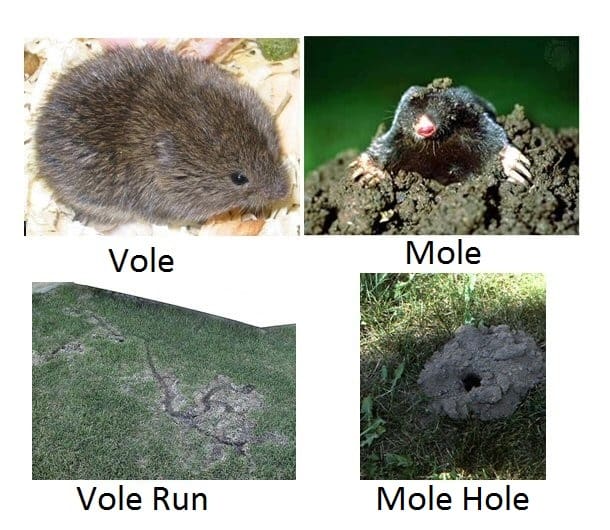
How to get rid of voles. What you’ll see… are three different species of “Microtus,” which include the meadow vole, pine vole, and prairie vole. All three species look like a dark-colored mouse with a short tail. Normally, they are quite shy and are seldom seen. In east Pennslyvania, the meadow vole is the most common, so I’ll discuss this critter. Pine voles, found in western Pennsylvania, have underground nests and subsurface tunnels.


We know how to get rid of Voles, contact us now for more help!


The reason for the problem… Under the protection of snow, the voles feed on the crowns of turfgrass. When the snow melts, you can see trails (not tunnels) that look much like you left a garden hose lying on the lawn. If there is a high population of voles, larger irregular areas may be damaged. Usually, loose grass that looks much like grass clippings, covers the damaged area. These damaged areas are usually located near protected hiding areas, such as ground cover and shrub beds. Unfortunately, the voles can also feed on the trunks and branches of plants.


Crabapples and junipers are favorite hosts. This feeding can cause girdling of the stem, which will result in the death of the plant portion beyond the girdle. On lower growing junipers, individual branches may be killed while the main trunk is not damaged. Girdled plants or branches usually die by late summer; however, some plants may die slowly over several years.


get rid of voles info StumpbustersLLC stump removal
Central PAs best stump removal service !

You Should… Lightly rake the damaged areas allowing sunlight to reach the soil so new grass shoots can form. Trails in the lawn will recover with normal growth. Larger damaged areas should be renovated and re-seeded. Girdled twigs should be removed by selective branch pruning, which is the best technique for pruning most junipers. Plants damaged with complete trunk girdling will need to be replaced. By the time the damage from voles is noticed, it is too late for prevention.


What can be done ?


Since most of the damage in landscapes takes place during the winter, damage prevention techniques should be implemented in the fall. If damage to trees and shrubs is anticipated, fall-applied rodent repellants can be helpful. Barriers to prevent trunk feeding can also be used. However, remember to push the barriers into the soil because the voles can feed at or slightly below the soil level. Finally, when you see a hawk perched on a pole, he or she is inspecting the grassy areas below for a vole meal. A cat on the prowl can also reduce vole populations.


We can help by… Ensuring the trees and shrubs are being protected from the surrounding damage promoting the quickest recovery possible.

Sunday Adelaja : ” Darkness, that is, ignorance, limits our visibility.”

Sunday Adelaja

Leaf spots, something to worry about ?

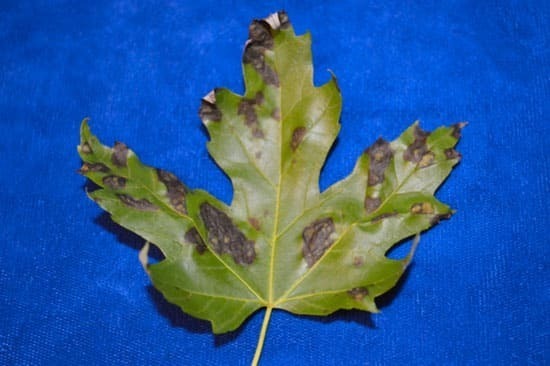
As a property owner, you want to keep your eyes open for a few common symptoms, such as leaf spots, powdery mildew appearing on the leaf surfaces and leaves turning yellow out of season. Leaf spots on trees are generally not important in the scheme of things but can be unsightly.


Maple leaf spots StumpBustersLLC stump removal

Some leaf spots are caused by a parasitic alga (Cephaleuros virescens). Cool wet springs are conducive to the formation of leaf spots. There are three different fungi that are the primary cause of leaf spots in trees. The majority of leaf spots are caused by fungi, but some are caused by bacteria. Bacterial blight causes brown leaf spots (often surrounded by yellow areas) and rapid browning of young shoots. The organisms that cause leaf spots survive in fallen infected leaves and twigs.


Leaf spots on trees are very common and generally do not require spraying. Most trees tolerate leaf spots with little or no apparent damage. Mature leaf spots produce spores or bacteria that can be spread throughout the canopy, which can start a second set of leaf spots or cause new infections on other plants. The later in the season that leaf spots develop the less need for alarm.


Unless there is substantial foilage loss, there really is no cause for alarm. Contact

What You Need to Know About Stump Grinding

Stump grinder machines are used to take away the dead and dying tree roots from sidewalks, driveways, and roads without causing any damage t...