Rhubarb Muffins

[ad_1]

Rhubarb Muffins are fluffy, tender, and have just the right amount of sweetness which pairs beautifully with the tart rhubarb. These one bowl muffins are the perfect addition to breakfast or brunch this spring!


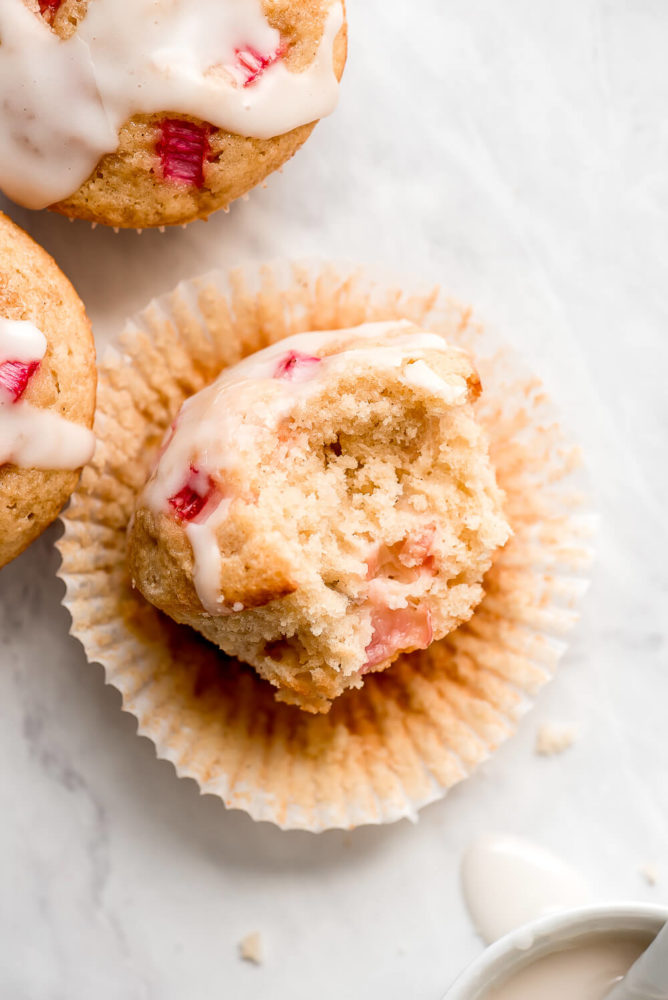
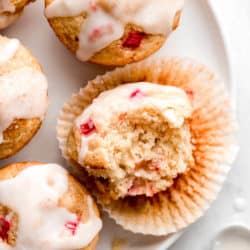
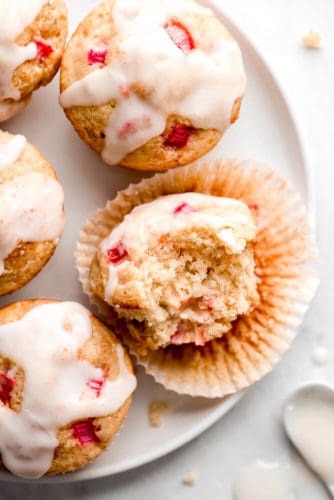
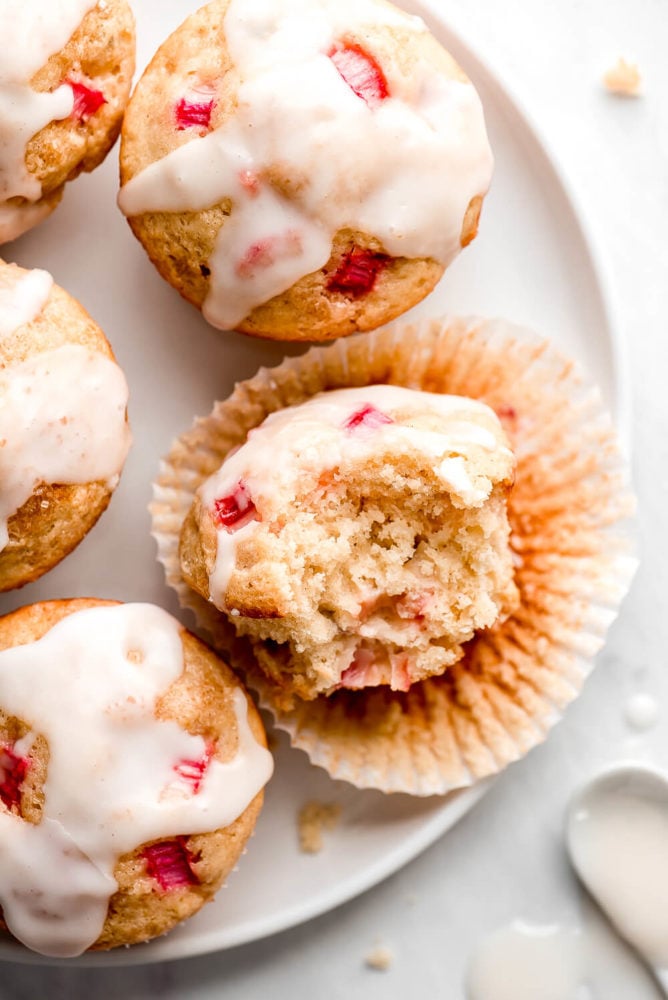
One of the best things about spring is the fresh produce, especially seasonal ones like rhubarb. These muffins are a yummy way to enjoy this spring vegetable. If you are looking for more muffin recipes, try Blueberry Oatmeal MuffinsApple Crumb Muffins, and Banana Poppy Seed Muffins. Glazed Rhubarb Muffins on a plate with one unwrapped and a bite taken out.


Rhubarb Muffins


Muffins are one of the best easy breakfast treats! They’re slightly sweet, have that delicious muffin top crust that everyone loves, and are a little denser than a cupcake but still have a soft and tender crumb. These Rhubarb Muffins have all that plus delicious pieces of tart rhubarb and a sweet simple glaze.


You’re going to love rhubarb in these muffins as much as you love it in Rhubarb Crisp!


What is Rhubarb?


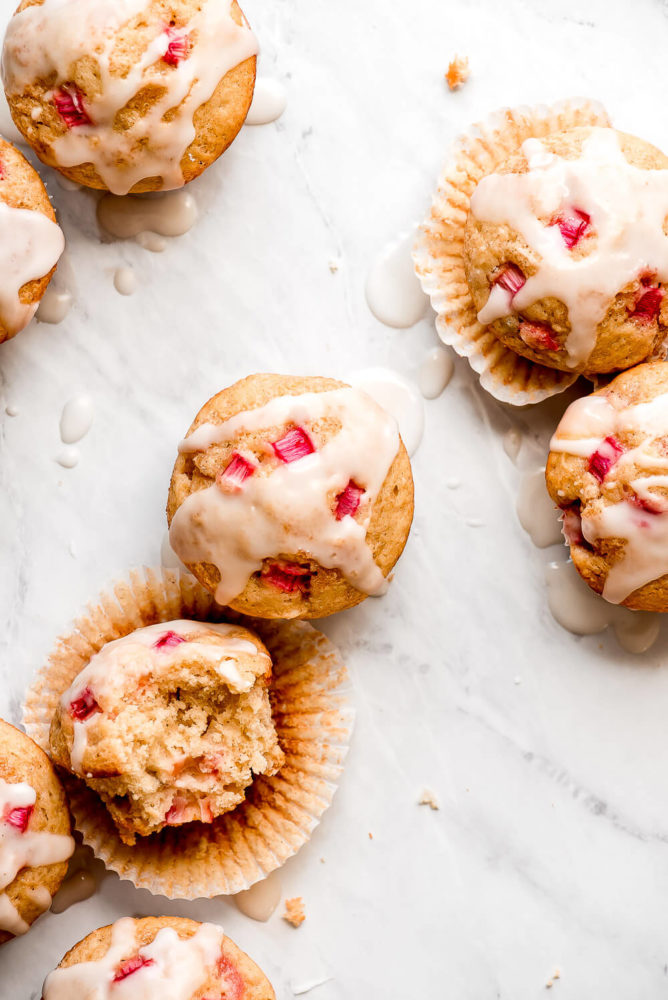
Rhubarb is actually a vegetable that has a similar resemblance to celery. It is most often used in desserts and commonly in combination with other fruits. Only the stalk is eaten. The leaves of the plant are poisonous. Rhubarb Muffins drizzled with a glaze and scattered on a marble surface.


Rhubarb Muffin Ingredients:


  • All-Purpose Flour: This type of flour produces the best texture for these muffins. Be sure to not over mix the batter once the flour is added.

  • Sugar: I prefer granulated sugar for these muffins but light brown sugar can be substituted if needed.

  • Baking Powder and Baking Soda: These are the leavening agents that make the cupcakes rise and have a fluffy texture.

  • Salt: A little salt is needed in baking to help enhance the other flavors in the muffin.

  • Cinnamon: Just a little is added for a subtle warm flavor without taking over.

  • Buttermilk: This adds moisture and makes the muffin crumb tender. You can make your own buttermilk by mixing 1 tablespoon lemon juice or vinegar with 1 cup milk and letting it sit for 5 minutes.

  • Butter: Provides the best flavor and results in a tender crumb. Usually baked goods get dry after two days but the rhubarb in these muffins makes them moist.

  • Eggs: These help bind the ingredients, give structure to the muffin, and help create a light and tender crumb.

  • Vanilla Extract: Pure vanilla extract gives the muffin a delicious flavor.

  • Rhubarb: Try to choose deep red stalks- they have more flavor. Chop stalks into pieces about the size of a blueberry.

  • Turbinado Sugar: These have a large sugar crystal that gives the muffins a pretty look and also adds a nice little crunch. You can substitute with any coarse sugar like baking sprinkles.
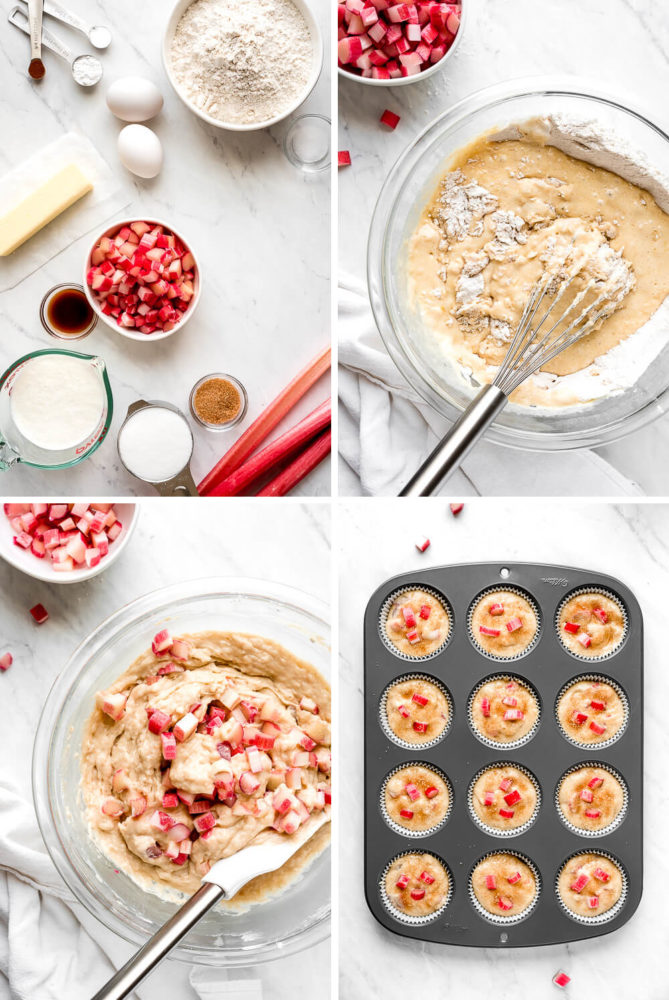
Four photos showing the ingredients and process of making muffins with rhubarb.


How to Make Rhubarb Muffins:


  1. Preheat oven to 425 degrees F and line a muffin pan with paper liners. Lightly spray the wrappers with cooking spray.

  2. In a large mixing bowl, stir all dry ingredients together. Push contents in bowl to the edges.

  3. Add the buttermilk, melted butter, egg, and vanilla. Mix everything together until just combined. (It’s okay if there are still a few clumps of flour.)

  4. Reserve 1/4 cup rhubarb and gently fold in the rest until evenly dispersed.

  5. Spoon a heaping 1/4 cup of batter into each liner. (A large ice cream trigger scoop works great.) Press reserved rhubarb into the top of the batter. Sprinkle with sugar (gives it a nice crunch).

  6. Place pan in the oven and set the timer for 5 minutes. Without opening the oven, turn oven temperature down to 350 degrees F and bake for 14-16 more minutes until lightly golden and set. (Baking at a high temperature for the first few minutes helps the muffins rise higher.)

  7. Let muffins cool in pan for 5 minutes and then transfer to a cooling rack.

How to make a glaze:


Whisk together powdered sugar with a little milk and a tiny bit of vanilla. If too thin, add more powdered sugar. If too thick, add a little more milk.


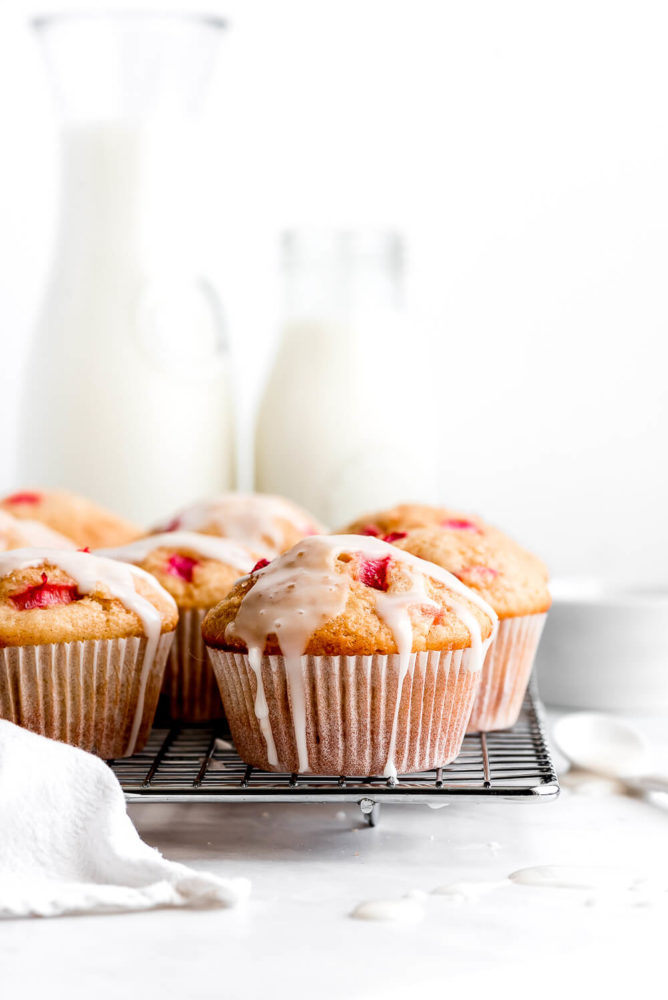
Spoon over the muffins while still warm. Rhubarb Muffins topped with a glaze on a cooling rack.


How to Store Muffins:


These Rhubarb Muffins taste best the day of but can be stored once completely cooled. Store at room temperature in an airtight container for 2-3 days or in the fridge for 3-4 days.


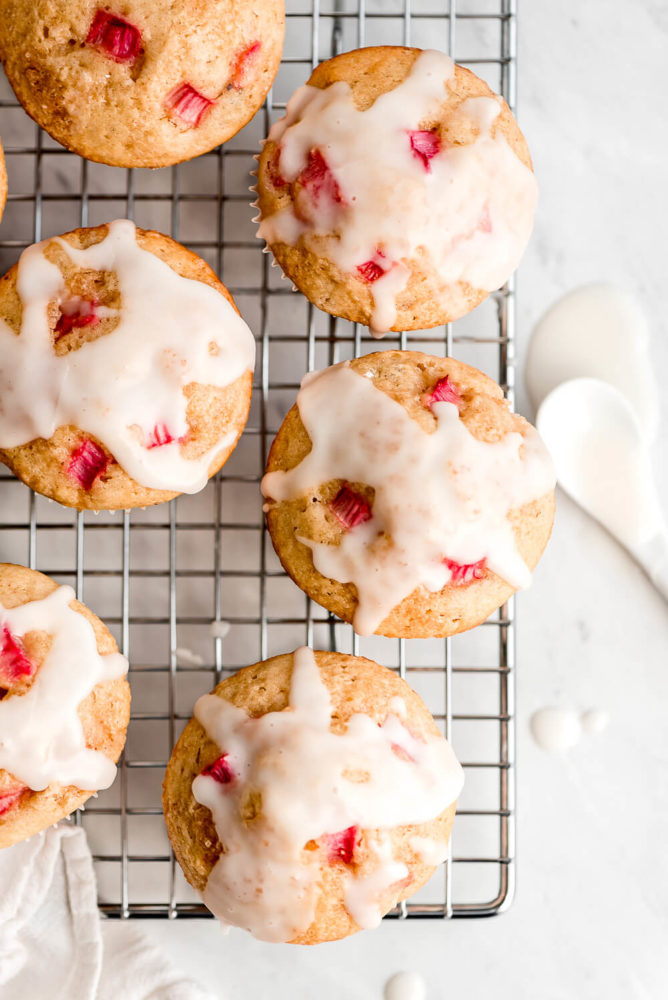
The can also be frozen with or without glaze. Once glaze has dried, wrap individually in plastic, place in a freezer safe container or bag and freeze up to 2 months. Let them thaw at room temperature. Glazed Rhubarb Muffins on a wire rack with a spoonful of glaze to the side.


More muffin recipes you’ll love!


A muffin laying on its side with a bite taken out, showing the light and tender crumb.


Print


Rhubarb Muffins


Rhubarb Muffins are fluffy, tender, and have just the right amount of sweetness which pairs beautifully with the tart rhubarb. These one bowl muffins are the perfect addition to breakfast or brunch this spring!


Course Breakfast
Cuisine American
Keyword Rhubarb Muffins


Prep Time 10 minutes
Cook Time 20 minutes
Total Time 30 minutes


Servings 14

Calories 235kcal

Author Melanie Dueck


Ingredients

For the Batter:

  • 2 1/2 cups all-purpose flour
  • 3/4 cup granulated sugar
  • 1 1/2 teaspoons baking powder
  • 1/2 teaspoon baking soda
  • 1/2 teaspoon salt
  • 1/4 teaspoon cinnamon
  • 1 cup buttermilk room temperature
  • 1/2 cup butter melted and cooled
  • 2 large eggs room temperature
  • 2 teaspoons vanilla
  • 1 1/2 cups rhubarb chopped
  • turbinado sugar or large sugar sprinkles, optional

For the Glaze:

  • 3/4 cup powdered sugar
  • 1-2 Tablespoon milk
  • 1/4 teaspoon vanilla extract

Instructions

For the Muffins:

  • Preheat oven to 425 degrees F. Line a muffin tin with paper liners. Lightly spray the wrappers with cooking spray.
  • In a large mixing bowl, whisk all dry ingredients together. Make a well in the middle by pushing the contents toward the edge of the bowl.
  • Add the buttermilk, melted butter, egg, and vanilla to the bowl. Mix until just combined. (It's okay if there are still a little clumps of flour.)
  • Reserve 1/4 cup rhubarb and fold the rest in until evenly dispersed.
  • Spoon a heaping 1/4 cup of batter into each liner. (A large ice cream trigger scoop works great. Batter will be almost to the top of the liner.) Press the remaining rhubarb into the top of the batter and then sprinkle some sugar on top.
  • Bake for 5 minutes. Turn oven to 350 degrees F and bake for 14-16 more minutes.
  • Let cool in pan for 5 minutes and then transfer to a cooling rack. Meanwhile, make the glaze.

For the Glaze:

  • In a small mixing bowl, mix together the powdered sugar, 1 tablespoon milk, and vanilla. Add more sugar to thicken or milk to thin until you achieved desired consistency.
  • Spoon glaze over the warm muffins.


Nutrition

Calories: 235kcal | Carbohydrates: 37g | Protein: 4g | Fat: 8g | Saturated Fat: 5g | Cholesterol: 43mg | Sodium: 209mg | Potassium: 137mg | Fiber: 1g | Sugar: 19g | Vitamin A: 278IU | Vitamin C: 1mg | Calcium: 60mg | Iron: 1mg


[ad_2]

Source link

All about the Dwarf Japanese Maple

Dwarf Japanese Maple StumpBustersLLC stump removal
www.StumpBustersLLC.com

Dwarf Japanese Maple Species Info


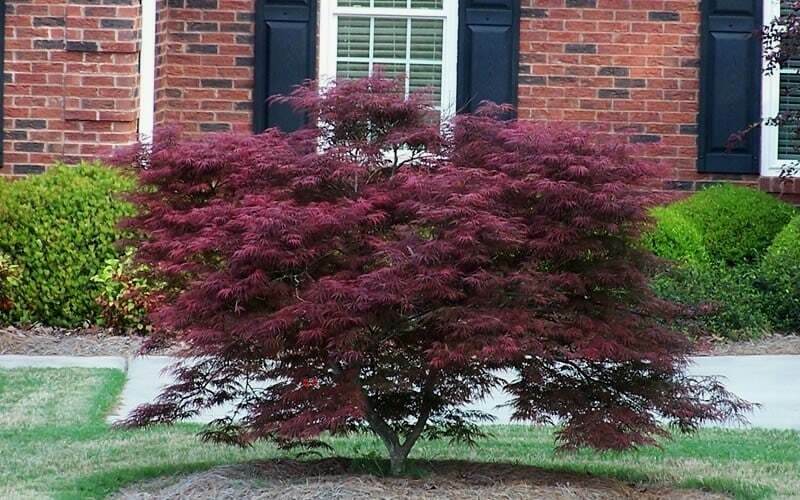
Dwarf Japanese maple belongs to the species Acer palmatum, just like the regular Japanese maple. It is a compact cultivar of the regular tree. This is a version of the Japanese maple that is slow-growing. It tends to reach a maximum height of six to eight feet. They have been cultivated to have small leaves and a profusion of branches to showcase the foliage that the tree is so famous for. Their compactness of size makes them a good fit for small gardens and even container gardening. You will find that the dwarf Japanese maple is popular in rock gardens. Great choice as a bonsai tree too. The tree tends to have dramatic fall coloring and it takes easily to different kinds of soil and climatic patterns. The roots of the dwarf Japanese maple are compact and non-invasive. Great choice for small spaces.


There are various cultivars of the dwarf Japanese maple have been grown to highlight different kinds of foliage. You can have some with the lace-leaf and some with variegated leaves. The color and shape of this kind of tree is what makes it distinctive. Cultivars find one of these features to highlight. Since it is small and encouraged to be well-branched, this kind of tree appears very dense and lush. You may want to tour neighboring nurseries to get an idea of the available cultivars.


Hard To Find Sometimes


If there is a tree in the neighborhood that has particularly caught your eye. Stop and find out where it was bought. There is no guarantee that any given cultivar is widely stocked. Among some of the famous kinds of dwarf Japanese maple cultivars we have Aratama, Geisha, Kashima, Baby Lace, Beni Hoshi, Beni, Hime, Kiyohime, Kinra, Yubae, Green Star, Ukon and Wou Nishiki. Many local nurseries develop their kind of the dwarf Japanese maple. You may have to ask around for sources if you spot a particular kind that you want to try in your garden.


Dwarf Japanese Maple leaves StumpBustersLLC stump removal
www.StumpBustersLLC.com

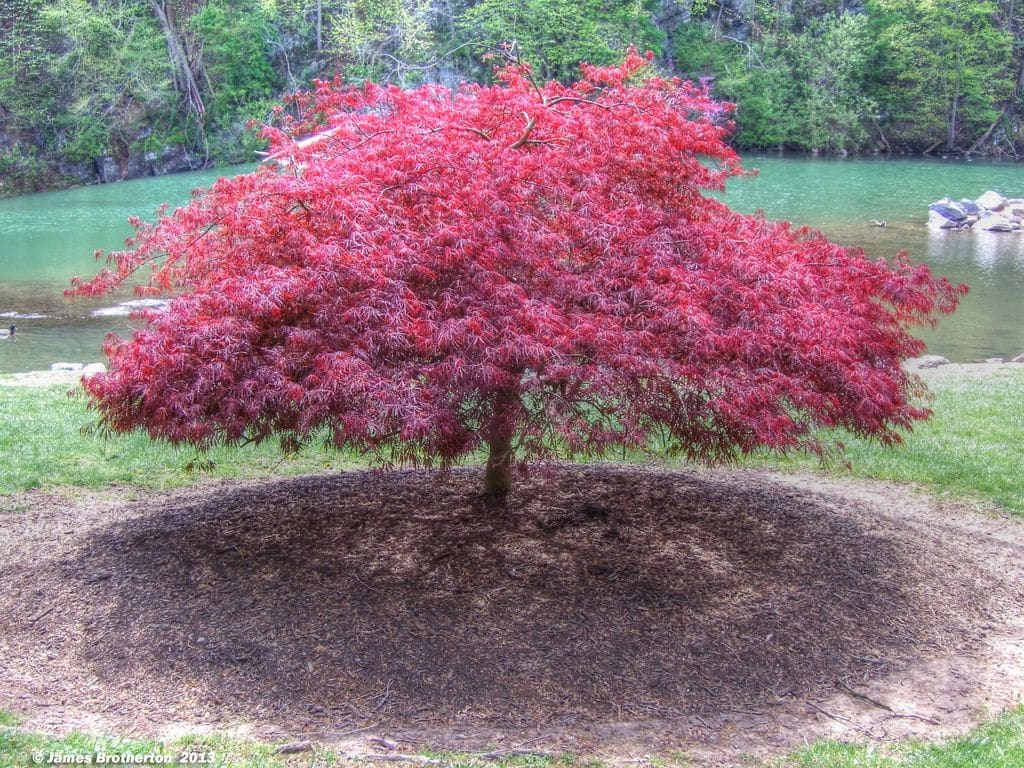
The cultivars are created to give different appearances to the tree. Very few grow tall and erect. Some are more like the Weeping Willow with trailing branches. I think most are created to emphasize the packed and tight quality. So, other than the color and the shape of the leaves, you have to consider the overall shape of the tree in choosing your dwarf Japanese maple. A confident gardener can create any shape they choose by pruning and trimming regularly. This is especially true of the bonsai variety of this tree. Like the bonsai version of the Japanese maple? You may either pick a trained tree and maintain its shape or pick a raw dwarf tree and create a shapely bonsai that reflects your artistic eye.


Planting Requirements


While you have to research the needs of the cultivar you choose, broadly speaking, dwarf Japanese maple needs well-drained soil and does not need too much direct sunlight. It does well in shady locations and should be protected against strong winds also. If you are unsure about which cultivar will work well in your area, you can talk to a nursery in the area or even take a walk around the neighborhood and find a thriving tree. Given the increasing popularity of this tree it is very likely that you will find one.


The dwarf Japanese maple is usually grown from cuttings and you can choose to start your tree from a sapling stage or buy a more mature plant. The soil will need to be well-conditioned and you have to watch out against over-fertilization or over watering to make sure that your tree adapts well to its new setting. Once the tree takes root it does not need too much by way of care and maintenance except the regular pruning.

Remember Your Humanity And Forget The Rest


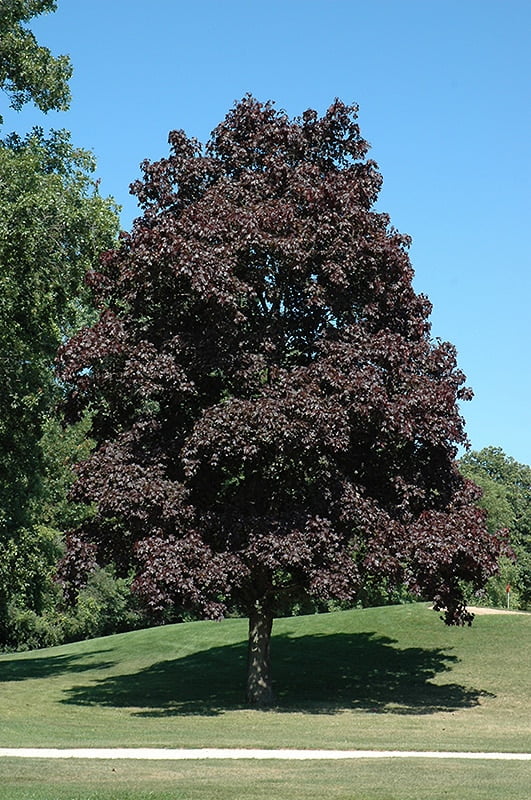
A Closer Look At The Crimson King Maple

Crimson King Maple leaves

Facts and Size


Even the name, Crimson King maple suggests a tree that is in some ways a bit out of the ordinary. The maple tree, botanical name - Acer, is one of our favorite deciduous trees, whether growing in the wild or a beautifully landscaped yard or garden. There are large maple trees, some reaching a height of 100 feet or more. Ornamental maple trees such as the Japanese maples, maples suitable for bonsai, sugar maples, and the vine maple, whose brilliant fall foliage are often seen along the nation's highways. Many, probably most, species of maple trees originated in Asia. However, there are a few species native to North America and Europe. Maples by and large grow in more temperate or cooler climates. They are usually not found where summer temperatures are very hot, or the overall climate is dry or arid.


The Parent, The Norway Maple - The Crimson King maple is not a separate species, but is a cultivar or variety of the species Acer plantanoides, the Norway maple. The Norway maple is a native of Europe and the western parts of Asia. Most varieties of Norway maple attain a height of 50 to 60 feet. The Crimson King variety is normally a bit shorter.


The various varieties of Norway maple are mostly at home in USDA Zones 1 through 9, with some varieties suited to warmer zones. While making attractive street trees, the Norway maple varieties tend to attract aphids, which while not harming the tree to any extent, drop large amounts of honeydew in the immediate area. The roots of the Norway maple and its varieties can also be invasive, and are often quite disruptive when it comes to lawn maintenance. Most of the time, grinding some of the roots will not be a problem.


Why choose the Crimson King Maple ?


Why Crimson? - The cultivar Crimson King maple, technically A. plantanoides "Crimson King", is noted for its attractive purple foliage. It is particularly popular in northern states where deciduous trees that have other than green foliage are sometimes hard to come by. One may well wonder why a tree with purple leaves is called “crimson”. When the leaves of the Crimson King maple turn in the fall, they take on several colors. Most of the time a color ranging from a dark maroon to crimson, while some of the leaves may turn brown or bronze. Crimson King is an excellent shade tree, as its foliage is quite dense and its canopy quite wide.


A few problems with this tree


Typically growing to a height of around 40 feet, this maple has a spread of up to 30 feet. The Crimson King maple is not particularly fussy about the soil it is in.It can grow either in full sun or partial shade. It is a self-seeding tree. It sends out prolific amounts of two-winged "helicopter" seeds, and in some areas can become somewhat invasive. As attractive as the tree is, it can be inhospitable to lawn grasses except those that grow well in dense shade. It is also a very thirsty tree, making the maintenance of lawn grass in its immediate vicinity even more challenging. This tree is a prime candidate for root removal.


crimson king maple tree

First Cousins To The Crimson King - In addition to its use as a landscape or specimen tree in private residences, the King Crimson maple is widely used to provide a border for parking areas, and is used on parking islands and strips as well. It also makes an interesting choice for bonsai. There are several other cultivars of the Norway maple which bear some similarities to the Crimson King. These include, the “Royal Red Leaf” and the “Schwedleri”. Both featuring red to purple leaves, and “Fassen's Black”, noted for its pyramidal shape and dark purple leaves.

The Mighty Oak

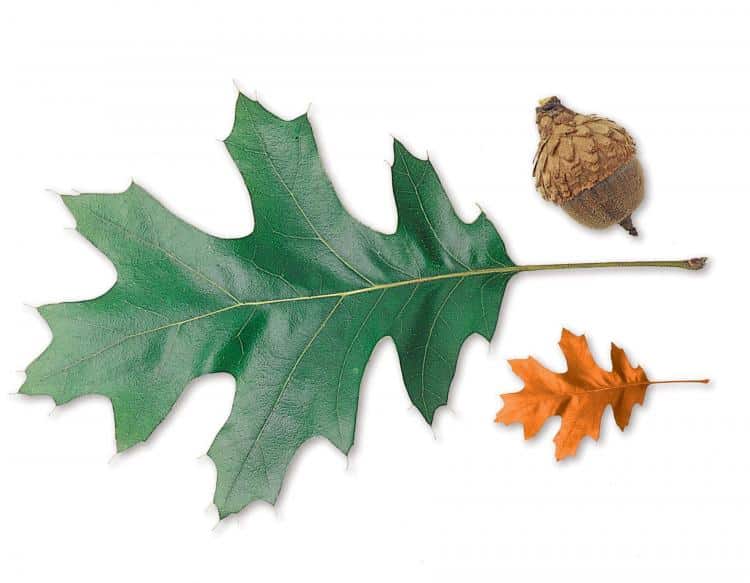
oak leaves and acorns StumpBustersLLC stump removal
Central PAs best stump removal service !

Right now there are roughly 600 varieties of oaks.


Oak is a member to the genus Quercus out of the Fagaceae group. The oaks are indigenous to the Northern hemisphere. Oak trees are found at latitudes from Northern Africa, Asia, Europe, as well as the Americas from temperate environments. Numerous varieties of oak trees are deciduous beside just a few of evergreen types. And only a few live to be over 100, although an oak's life cycle could be about 200 years. The Pechanga Great Oak Tree oak tree in the United States is the oldest on the planet. The tallest discovered oak is 44 meters high. Oak trees have male flowers in a specific section of the branch. Female flowers on one portion of a different branch.


The fruit is a nut called an acorn


Formation of acorns starts by twenty to fifty years of age. Each and every acorn contains one seed and requires 24 calendar months in order to develop, conditional upon their species. Just one in 10 000 acorns are going to work out how to develop into an oak tree. This, despite the fact that one oak generates more than 2000 acorns each year. As anyone with a big Oak tree knows, this can leave quite a mess in your yard. Wild animals that consume acorns include jays, ducks, bears, and deer mice. The leaves and also acorns of the oak tree are deadly to horses, cattle, sheep, and goats in large quantities. Due to the toxin acid which can lead to kidney damage and gastroenteritis. Oaks are keystone species in a broad range of habitats from the Mediterranean semi-desert to the subtropical rain forest.


oak leaves and acorns 2 StumpBustersLLC stump removal
Central PAs best stump removal service !

Numerous types of oaks are under threat of extinction


Numerous types of oaks are under threat of extinction throughout the wild. From such things as environment deterioration, over-exploitation, diseases and also the arrival of intrusive species. Oakwood has great strength and also hardness. The hardwood is remarkably immune to insect and also fungal attack attributed to its own high tannin content. The use of oak in wine may add a wide range of different tastes to wine. Depending on the type and additionally the behavior related to the oak. Oak barrels provide to the complexion, taste, and odor of the contents. These pass on a pleasing oaky vanillin taste to these drinks. Various kinds of truffles, including the two well-known varieties, the dark Prigord chocolate truffle, and the white colored Piedmont chocolate truffle, experience symbiotic connections with oak trees.


Oakwood has great strength and also hardness.


The oak is without a doubt a pretty popular symbol of strength and also vitality. It has been selected as the national tree of many countries. Oak is the national tree of the United States, Germany, Serbia, Cyprus, England, Estonia, France, Moldova, Romania, Jordan, Latvia, Lithuania, Poland, Wales and likewise Bulgaria. In Greek mythology, the oak is the tree sacred to Zeus, king of the gods. In the Scriptures, the oak tree in Shechem is the place in which Jacob hides the foreign gods of his people. The badnjak is carried to the home and positioned on the fire on the night of Christmas Eve.


big oak tree StumpBustersLLC stump removal
Central PAs best stump removal service !
Oak trees have a long history


Within Republican Rome a crown of oak leaves was presented to anyone who 'd saved a life of a person at a battle It was known as the civic oak. The Emancipation Oak is designated 1 of the 10 largest trees in the World by the University Geographic Society. It is also a portion of the National Historic Landmark district of Hampton University. Even though it's hardly ever attained, the attribute of an 80th wedding anniversary is oak. Oaks are more prone to be hit by lightning than other trees.StumpBustersLLC

How much does stump removal cost ?

how much does stump removal cost StumpBustersLLC stump grinding
www.StumpBustersLLC.com

How much does stump removal cost ?


How much does stump removal cost ? Determining the cost of work includes a variety of factors. Some of these factors include the size of the tree, location, overhead utility lines, and so on. If a stump is located near a home or garage. It will cost significantly more to remove than if the stump was located in a wide open area. There are several ways that a homeowner can save money on tree work, in some cases by 50%. The following is some consumer tips on how to save money when preparing for tree work.


Preparing your Landscape


In most cases you can save hundreds, sometimes thousands, with a little landscape preparation. It is a good idea to price the cost of the plants or flowers that you are concerned about and decide if it is more cost effective to replace the plants or pay the tree service, sometimes thousands more, to technically rig the tree to save the plants or flowers in question. One thing that I always suggest is transplanting and moving all potted plants during the tree work process. If you have a section of fence that is near the stump in question, it can save you money to remove the section during the tree work process. Utility lines such as cable, phone, and electric can be dropped at no cost to the homeowner by your utility companies, saving you hundreds, sometimes thousands.


Money Saving Tips


how much does stump grinding cost stump removal StumpBustersLLC
www.StumpBustersLLC.com
Firewood and Debris


One way to cut your costs significantly, sometimes by 50%, is to keep the wood generated from the tree work and use it for firewood. Even if you don’t burn firewood, in most cases, you probably know someone who does that is just a phone call away. We will cut the wood into firewood size rounds and leave it for you to split into pieces that will fit in your wood stove or fireplace, saving you hundreds, sometimes thousands.


Debris removal is also a big portion of the cost for your tree work. If you want to get a “Bang for your buck”, processing all of your own debris is also an option. We can work twice as fast and remove more trees per day if we are not spending ½ of our time processing debris. This method is more work for you. Choosing to process your own debris allows you to get more tree work done for your money.

Maple Tree: Care and Maintenance

Maple Tree Care StumpBustersLLC stump removal
Central PAs best stump removal service !

Proper maple tree care is critical for growing and enjoying a gorgeous maple in your garden. However, this is not necessarily complicated. Paying attention to the soil, fertilizing, sun exposure and general health of your tree. All these are things that any plant lover knows are the basics of gardening.


The gorgeous maple tree is a gracious addition to any landscape design. The shape and color of the leaves of this deciduous tree have made it particularly popular with home-owners and cityscape designers.


Maple Tree Care From the Beginning


There is a wide variety of maples and depending on the type of wood, some of them are used for construction and others are the raw material for high-quality furniture. Maple syrup is a popular supply in many a pantry and these are made purely from the sap of Sugar Maples. Maple trees are also famous for their gorgeous fall colors and people from far and wide travel to the northeastern United States to capture the glorious trees at their vibrant best. Given all these associations, it is hardly a wonder that many people love the idea of having one or two maple trees in their backyard.


There are different types of maples that do well in different climatic and soil conditions and it is a good idea to talk to your local nursery or plant supplier before deciding on the actual variety that you want to buy. This preliminary research will go a long way in simplifying your maple tree care regimen. A tree that is naturally likely to do well takes less effort than one that is planted in less than optimal conditions. And this is not an annual that you are experimenting with, but a long-term tree and it is has to be a deliberate decision.


The Execution


Once you have acquired the sapling, you have to decide where to plant it. Look for a place in the yard that has good soil and full sun exposure with some degree of shade. The type of soil will be dictated by the maple you have chosen. Some maples need good drainage and moist soil while others can take some periods of dryness or even excessive watering. There is a range. It probably is safest to say that a well-drained and relatively moist soil is a good bet for most kinds of maples.


The other element of the soil that is important to analyze is the nutrient level it offers the trees. Most urban landscapes or residential developments do not have the natural enrichment of forest soil. You may need to add plant nutrients and fertilizers. The type of fertilizer you choose will depend on where you live and what is naturally available in the soil of the area. You may need to research what else your maple needs and provide that additive. Also, be aware that nitrogen-rich fertilizers that are recommended for lawn care may actually be ineffective or even harmful for maple trees.


Central PAs best stump removal service !

Maple Tree Care Long Term


As a general principle, all maples thrive in soil which has mycorrhizal fungi. Mycorrhizae fungi and trees have formed what is called a symbiotic relationship.They each provide something the other needs. Mycorrhizal fungi take sugar and carbohydrates from the trees. This provides minerals and moisture that the trees need after processing them. This symbiotic relationship has helped maples survive sometimes even under extremely harsh conditions such as drought or poor soil. This is because in effect the mycorrhizal fungi serve as a living extension of the trees’ root system. This enables them to optimize their chances of survival. The fungi process the much-needed nutrients that are critical for a healthy maple tree. Sadly, these fungi are missing in most compacted soil. As an important element of early maple tree care. Introduce these fungi into the soil around your maple tree.


As the plant grows, you may need to provide it a stake to make sure the roots have support. You may have to prop up the young tree even under windy conditions. Pruning at the right time is also a part of maple tree maintenance. As the plant grows and becomes a tree, stay aware of the surroundings of the tree. You will need to assess whether you need to transplant. If the conditions around it change to limit its space or supply of sunlight.


Among the threats to maple trees to watch out for are the Asian long-horned beetle. Maple trees are known to be susceptible to some diseases such as Anthracnose, Maple wilt or Verticillium wilt and Sapstreak.

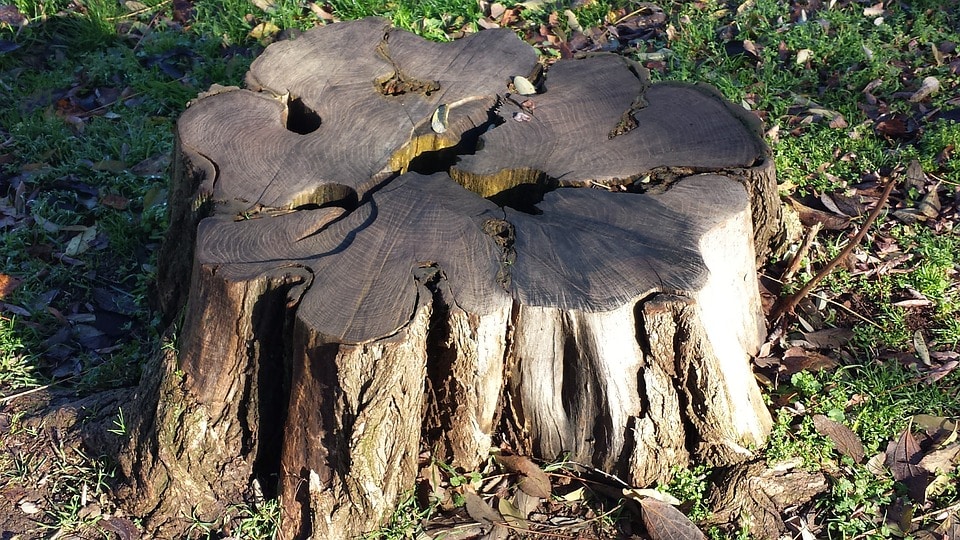
What You Need to Know About Stump Grinding

Stump grinder machines are used to take away the dead and dying tree roots from sidewalks, driveways, and roads without causing any damage t...