A Look At Several Maple Tree Diseases

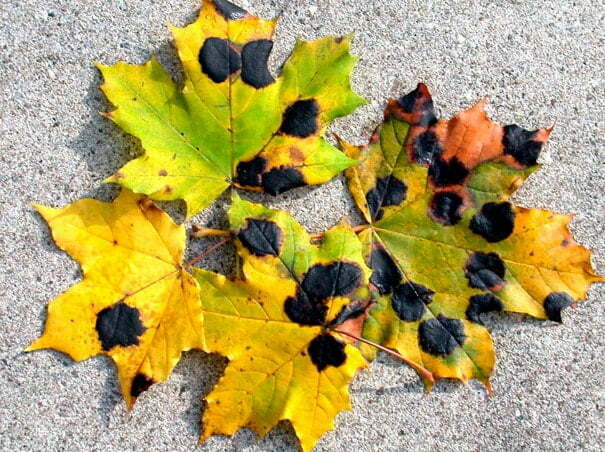
tar spots maple leaves Maple Tree Diseases
www.StumpBustersLLC.com

Maple tree diseases can strike even established healthy trees, but the best preventive measure remains to do those things which lead to keeping a tree fit and healthy. Sometimes a disease can't be prevented, and often can't be detected early enough to be able to take effective action. Fortunately most maple tree diseases are not all that widespread, and not all diseases will result in the death of a tree.


Stress Can Cause A Problem - Maple trees in urban areas are usually more at risk than those growing in the wild and rural areas. Maple trees growing near streets are particularly vulnerable, as they are exposed to both air and groundwater pollution and at times to salt which may be spread on roadways in the winter. These conditions often put a great deal of stress on the trees, sometimes resulting in dropped leaves or dying branches. While not exactly classified as a disease, these stresses can certainly weaken a maple tree, making it more susceptible to any number of diseases, most of which are caused by some type of a fungus.


maple leaf spots Maple Tree Diseases
www.StumpBustersLLC.com

Not All Fungi Are The Same


Some types of fungus-related maple tree diseases will eventually kill a tree, and may if not checked, spread to other trees. Other types can disfigure a tree, weaken it, or both. Still other types of fungus will disfigure leaves and possibly buds or branches temporarily, but are not particularly serious and treatment may not be required.


Several diseases can strike not only maple trees but other hardwood trees as well. If an elm or oak for example becomes diseased, the disease may or may not spread to a nearby maple tree, or may not have any effect on a maple tree. Some fungal infections only strike a particular type of tree, while others may affect several types.


Powdery Mildew, Tar Spot, And Sooty Mildew - There are maple tree diseases that, while making the tree temporarily unsightly, do little permanent harm, and usually do not require treatment. One of these is Powdery Mildew. Powdery mildew can strike many different kinds of hardwoods, including the maple, but some, like the beech tree, tend to be more susceptible. The mildew can form a white coating on the leaves, usually on the undersides, and the condition may last until the leaves drop naturally, and may or may not reappear the following season.


BREAKDOWN OF A FEW COMMON TYPES


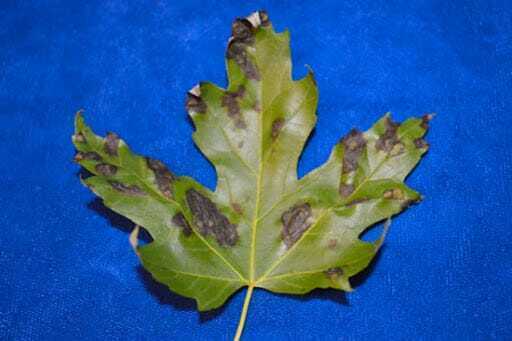
Tar Spot is another disease that affects the maple and several other hardwoods. Large, dark, and unsightly tar spots appear on the leaves, remaining there until the leaves finally drop. Tar Spot is generally not regarded as a serious problem. A third common disease is Sooty Mildew. This is caused by fungi growing on juices emanating from the leaves or honeydew deposited by insects. The tree itself is not being attacked, so Sooty Mildew is not a serious problem.


verticillium wilt maple leaves Maple Tree Diseases
www.StumpBustersLLC.com

Maple Wilt - Maple Wilt is the most common of the maple tree diseases. This disease, caused by the verticillium fungus, begins in the root system and spreads up into the trunk and branches. Maple Wilt is also called Verticillium Wilt. It is a serious disease that will often kill all but the healthiest and largest maples. An affected tree usually needs to be cut down to prevent the fungus from spreading.


Sapstreak - Another fatal disease is Sapstreak, also a fungal disease. Sapstreak usually affects only the sugar maple, and not only kills the tree, but makes the wood unusable for commercial purposes in the process.


Canker - Canker is yet another disease that is observed as disfiguration and boils in the bark and on branches. The cankers are symptoms of the underlying fungal disease. This disease usually affects individual branches rather than the entire tree, and is usually treatable through a combination of fungicide application and the pruning away dead and diseased branches.


Fungal infections, which account for most of the maple tree diseases, can be difficult to contend with or treat. The best measure is of course to attempt to make the tree and the area around it as inhospitable as possible to fungi. The best preventative is a healthy, established tree that is well cared for.

Eastern Pine Shoot Borer

Eastern Pine Shoot Borer
www.StumpBustersLLC.com

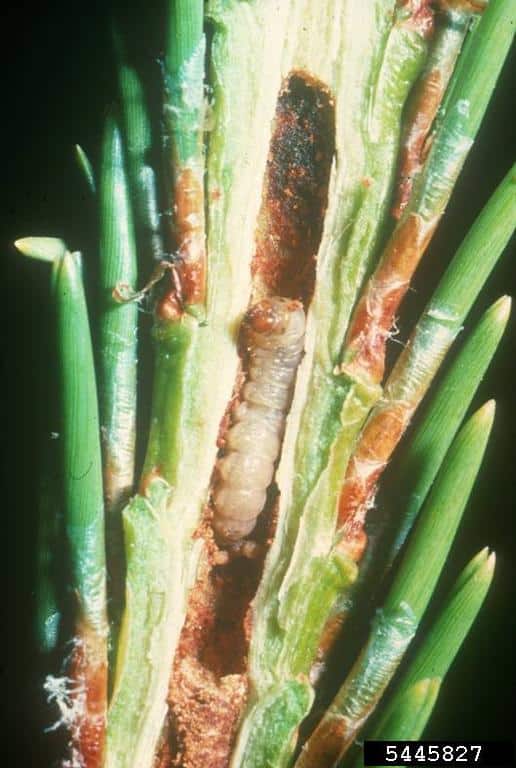
Symptoms of a eastern pine shoot borer problem


When you notice shoots beginning to wilt, turn yellow and drop its time to take action. The first evidence of an attack occurs about mid-June when the outer 6 to 8 inches begin to droop and turn yellow. Frequently the shoot breaks over or drops off near the base of the attack, leaving a distinctive flat stub. Terminal shoots are more susceptible to attack than lateral shoots. Some shoots, especially on Douglas-fir, may wilt and droop before yellowing and resemble a shepherd’s hook. They cause trees to become stunted and crooked; crooks and forks develop after terminal shoots are killed. The general crown shape of the tree is ruined when lateral shoots are killed. The wound caused by the broken shoot can be an open invitation to disease-causing organisms.


Eastern Pine Shoot Borer larvae
www.StumpBustersLLC.com

If you think your trees are being damaged by the eastern pine shoot borer, contact us now!


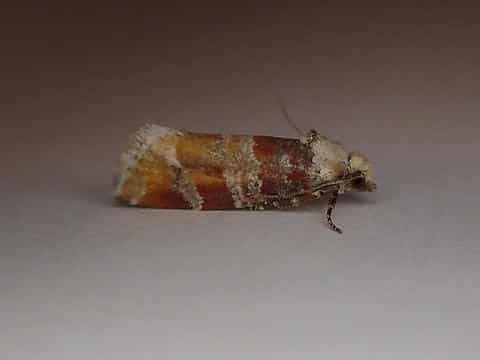
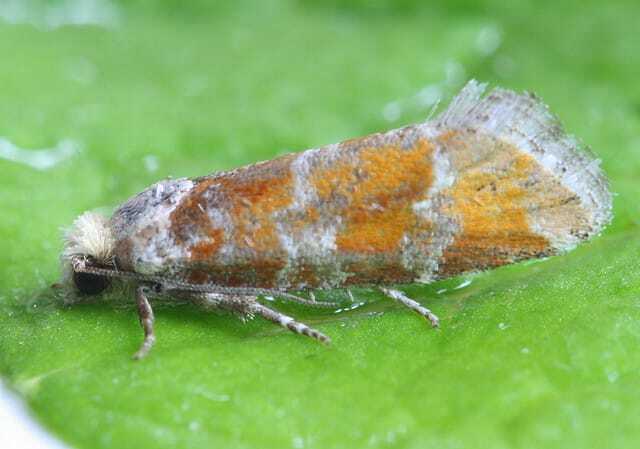
The reason for the problem…is the eastern pine shoot borer Eucosma gloriole, also known as the white pine tip moth, American pine shoot moth, and white pine shoot borer. It has been recorded on many conifers, especially pines. It prefers eastern white and Scotch pines but has been observed feeding on jack, red, Austrian, pitch, and mugo pines. It also occurs occasionally on spruce and Douglas-fir. Although it attacks trees up to 30 ft. tall, it is most injurious to trees 3 to 8 ft. tall.


WHEN THE PROBLEM EMERGES


Adult eastern pineshoot borers emerge in late April to mid-May or soon after the buds burst. The moths are rarely seen during the day and fly short distances between trees only when disturbed. Mating and egg-laying occur at night. After mating, each female usually deposits one egg on the needle sheaths on each of several different new shoots. Within 2 weeks the larva emerges from the egg and bores into the shoot adjacent to the needle fascicle, or occasionally behind a cone or bark scale along the shoot. It mines downward in the pith, the gallery widening as the larva grows. When nearly mature, the larva cuts into the woody portion of the stem, usually near the base of the gallery.


Eastern Pine Shoot Borer closeup
www.StumpBustersLLC.com

You should…keep a watch on your conifers in-between visits and let us know if you notice any of the above-mentioned symptoms.


We can help by…deep root-feeding your trees using organic tree fertilizers coupled with a systemic insecticide designed to control this problem internally which will eliminate the need for messy tree spraying that could potentially drift or injury beneficial insects.

Planting and Growing a Southern Magnolia Tree

southern magnolia flower
www.StumpBustersLLC.com

GENERAL INFO


The southern magnolia tree, or the magnolia Grandiflora, is a very fragrant and attractive evergreen tree. This tree is natively grown in the southern states of the United States from Virginia to Florida and a far westward as Arkansas and parts of Texas. In this article we are going to learn a little about this species of tree as a whole, as well as tips for planting and maintaining the tree to ensure that it has a long and healthy life.


The southern magnolia tree makes a wonderful addition to any type of landscape, but it is most often coveted for the beautiful large, white flowers it produces. They are very fragrant and add a soft touch to the “feel” of the garden. The flowers alone can grow up to twelve inches in diameter. The leaves can grow up to eight inches long and five inches wide and are often dark green on top and a yellow-orange color on the underside. They are stiff and glossy, which almost makes them appear like a high-quality false plant.


The southern magnolia can grow as tall as ninety feet, and in a few instances it has exceeded one hundred feet in height. They are often planted to add shade to a yard and it serves that purpose well!


PREPARE FOR PLANTING


The first thing to consider when planting your southern magnolia tree is where you want to plant it. Recall that these trees are very tall and can spread out to be as much as fifty feet in width. If you don’t have that kind of room in your garden, consider purchasing a dwarf breed of the magnolia that can reach a height of anywhere from two to nine feet—perfect for a smaller garden or one with a specific landscaping scheme. The area must also offer the southern magnolia at least partial sunlight, although full sunlight is best for this type of tree. The tree must receive a minimum of five hours of sunlight each day.


The soil requirements for the southern magnolia are not too difficult to meet, but certain conditions will cause your magnolia to thrive if you are willing to put forth the extra effort. The area should have good drainage to prevent the roots from rotting.


That being said, if you keep the soil moist—or live in a moist climate—the southern magnolia tree will thrive. If you want to give it your all, invest in a soil that falls into the pH range of four to seven. Magnolias are pretty tolerant of fluctuations in the weather, so don’t worry too much if you have a super rainy week followed by a hot/dry spell. If you live in a particularly dry area, you may want to make it a point to water your magnolia tree often.


southern magnolia tree
www.StumpBustersLLC.com

To plant the tree, you will need to dig a hole that is twice as deep as the root ball as well as twice the width. Use the gardening spade to “turn” the soil. This not only allows you to remove rocks and weeds from the soil but it also loosens it so that the tree’s roots can easily spread through the soil. Spread about four inches of mulch over the bottom of the hole, and then hold the root ball in the center of the hole while you fill the surrounding area with the remaining soil. You want the top of the tree’s roots to be level with the ground, yet fully covered by the loosened soil.


Important things to consider


The next step is to secure the small tree. The support is necessary not only because of the loose soil, but also because the sapling can easily bend or snap on a windy day. Hammer the stake deep enough into the ground so that it doesn’t easily move with a “jiggle test”. Use a durable string to secure the sapling to the stake. When you have secured the tree, go ahead and add about four inches of mulch around the area of the tree. For this you can use pine straw or leaves. During the first three months the sapling will need about five gallons of water each week, but after that you only need to water it during drought weather.


Maintenance isn’t very difficult for a southern magnolia tree. Pruning while the tree is dormant will help it to achieve the nice, full look that is so appealing. Be sure that you do not prune it until after it has been leafless for at least a month. As mentioned before, you need only water during times of drought and need only be fertilized once or twice a year.


Once your little sapling begins to grow and sprout those first fragrant blooms, you will find that the planting process was worth the beauty that this tree can produce! With a little luck, you should be enjoying your magnolia tree for many years to come!

A Quick Guide To Magnolia Susan

Magnolia Susan landscape
www.StumpBustersLLC.com

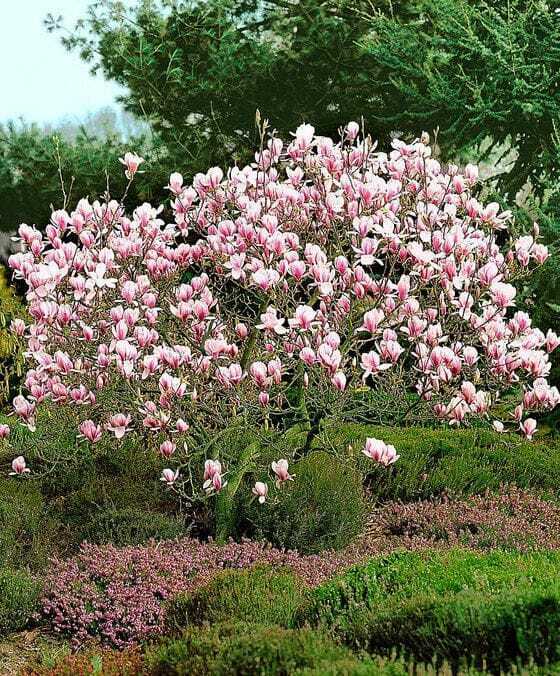
A wonderfully fragrant and lovely choice for a spring bloomer is the Magnolia Susan. Just one of the “girls” in the hybridized Girl Series of magnolias, Susan is sure to please any homeowner that is looking for a showy start to the spring season.


The United States National Arboretum is responsible for the creation of the Susan, which resulted from a cross of the Magnolia stellata called Rosea and the Magnolia Teleflora called Nigra. Eight hybrids in all were created through three controlled pollination series between 1955 and 1956, and are known as “The Girl Magnolias”. Included in this series are Susan, Ann, Betty, Jane, Judy, Pinkie, Randy, and Ricki; all have proven to become very popular among home gardeners.


Magnolia Susan purple closeup
www.StumpBustersLLC.com

Characteristics Of The Magnolia Susan


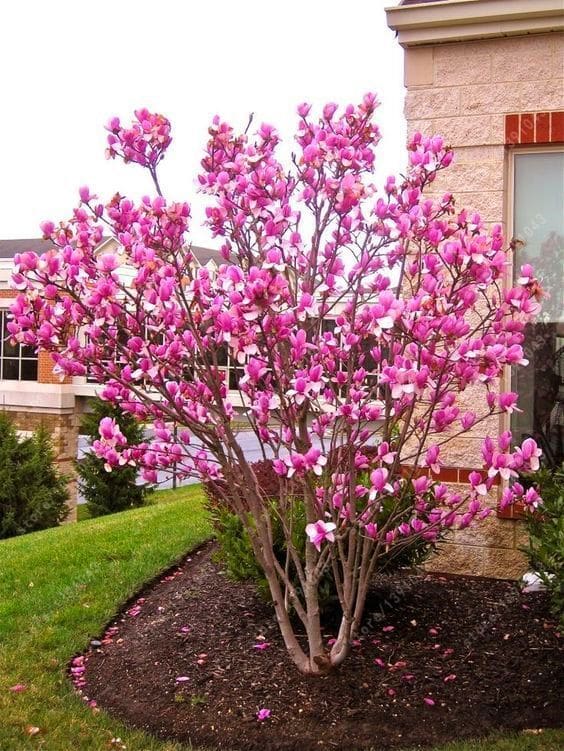
The hybrid known as Susan can be grown as a large shrub or small tree, with maximum height possibly reaching as much as 10 feet. Homeowners within the USDA zones 5 to 8 can enjoy the beauty of the spring blossoms that appear a few weeks later than the star or saucer varieties of magnolia. Susan exhibits dark purple buds that open into deep cerise/pink, cup-shaped blossoms of five single petals. The spring air is heavy with the perfume of these showy flowers from April through May, adding to the universal appeal of this magnificent slow-growing shrub.


Branches and the stem of the shrub are oddly unremarkable, considering the intense fragrance and beauty that the blossoms themselves exhibit. Multi-stemmed, the branches have a silvery grayish bark which can be considered to be of winter interest. Large green deciduous leaves that have a slightly leathery texture cover the branches throughout spring and summer, changing to a yellowish-green in the autumn.


Magnolia Susan is not self-sowing; it can be easily propagated using semi-hardwood cuttings or simply by purchasing a starter shrub in the nursery.


Growing Tips


As most magnolias, the hybrid known as Susan does best in acidic to slightly acidic soil. It does well in clay or loam type soils, making it an easy plant to grow. The shrub requires at least partial sun, but full sun conditions offer optimal results. Choose the planting site wisely, as Susan does not like to be disturbed once it has become established. The soil should also have good drainage to avoid the roots sitting in water. Wind can be an enemy for this shrub; it should be located in at least a partly sheltered area that is not fully exposed to winds.


To plant the shrub, dig a hole larger than the root ball of the starter plant. For neutral soil, add peat moss to the hole to allow for the acidity the shrub requires. If desired, an acid-based fertilizer can be added. Tamp in soil around the root ball and water well. Continue to water the plant as needed.


Because the shrub is slow-growing and has a neat, upright growth habit, it poses little threat to any companion plants. Other plants that do well around magnolias are begonias, hydrangeas, and hostas. Since it is slow-growing, Susan is an ideal plant for either small or large gardens.


Care And Maintenance


In acidic soils, Magnolia Susan tends to develop chlorosis, a condition most often caused by an iron or magnesium deficiency and resulting in yellowing of leaves. To treat this, a product such as iron sulfate can be dissolved in water and applied to a composted material. This treated material can be integrated into the soil or mulched over the plant’s roots to balance the deficiency and heal the plant.


When flowering has finished (usually by the beginning of June), it is usually a good idea to lightly prune the shrub to ensure a well-rounded plant and good flowering in the next season. Deadheading the spent blossoms is not necessary, but if done while the shrub is young it will encourage more plant growth by discouraging seed production. As petals from the Magnolia Susan drop, they should be swept up and removed so as not to invite pests or possible disease.


There are no real threats of insects attacking the Susan; however, the Magnolia scale is a possibility. If an infestation occurs, the scale should be removed by scraping the leaves or by spraying with an insecticide.


Magnolia Susan wild
www.StumpBustersLLC.com
Cautions


Though lovely and aromatic, homeowners with children and pets need to realize that the Magnolia Susan also has significant drawbacks. First and foremost is the fact that all parts of this plant are poisonous if they are ingested, including leaves and seeds. The plant has spiny outgrowths that can be dangerous; cuts or scratches will occur if extreme caution while handling the plant is not exercised. In addition, skin irritations have been known to occur in people who have allergic reactions to the magnolia. Pollen can also be an issue for these individuals.


Any gardener in USDA zones 5-8 who seeks a showy display of lovely blossoms, as well as the fragrance they emit, cannot go wrong with Magnolia Susan. One of the eight lassies in The Girl Magnolia hybrids, Susan is sure to please with her striking and vibrant mid-spring blossoms.

Spider Mites

WHAT YOU’LL SEE…


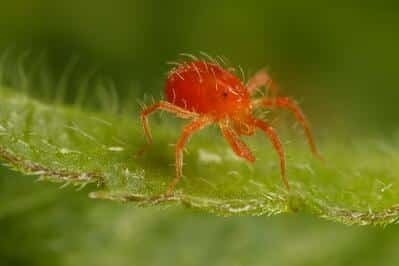
spider mite closeup
www.StumpBustersLLC.com

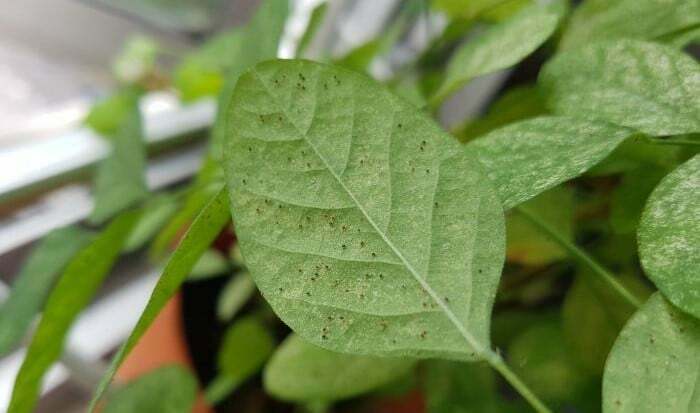
Is a general fading of the green color of the leaves of the bush. As damage continues, the leaves will develop a flecked or stippled pattern. Excessive damage will cause the leaves to have a bronzed appearance, and may die. Place a piece of white paper beneath a branch that you suspect may have a problem with mites. Shake the branch over the paper. Tilt the debris off the paper then wipe your fingers across the sheet. The green, brown, or red smears will indicate if you have a mite problem. Little red spiders that move fast and are still visible to the naked eye are predatory Mites and are beneficial insects you should not harm.


THE REASON FOR THE PROBLEM…


Is a tiny 6-legged spider that can feed on many kinds of plants. They suck the juices out of shrubs, bushes and some trees. There are about a dozen different kinds of mites that are damaging to woody ornamentals. Most mite populations will rapidly build up a population during hot weather. Mites can grow from egg stage to adults in only about 5 days, making prevention very difficult. This is especially true since some species can have as many as 10 or more generations per season.


spider mites on leaf
www.StumpBustersLLC.com

THE BEST WAYS TO CONTROL THIS PROBLEM…


Is to maintain cooler plant temperatures through proper irrigation and shade tree installation. The egg stage of some species will also be controlled by this application. Close monitoring of damage and mite populations will indicate whether or not further steps are required. An effective option for you is to use your garden hose and wet the entire bush daily if the plants are located against brick or within a rock bed where heat can build up quickly. This will destroy the webs, foster biological controls, and help minimize populations.


spider mite closeup 2
www.StumpBustersLLC.com
OTHER OPTIONS AVAILABLE TO YOU…


Include an application of a Miticide combined with an Ovicide for egg control during the heat of the summer to affected bushes. One application may not completely control an entire population but will greatly reduce the damage. Because of the many generations of this pest, follow-up applications may be required. HOME

Keeping A Bloodgood Maple

Keeping A Bloodgood Maple StumpBustersLLC
www.StumpBustersLLC.com

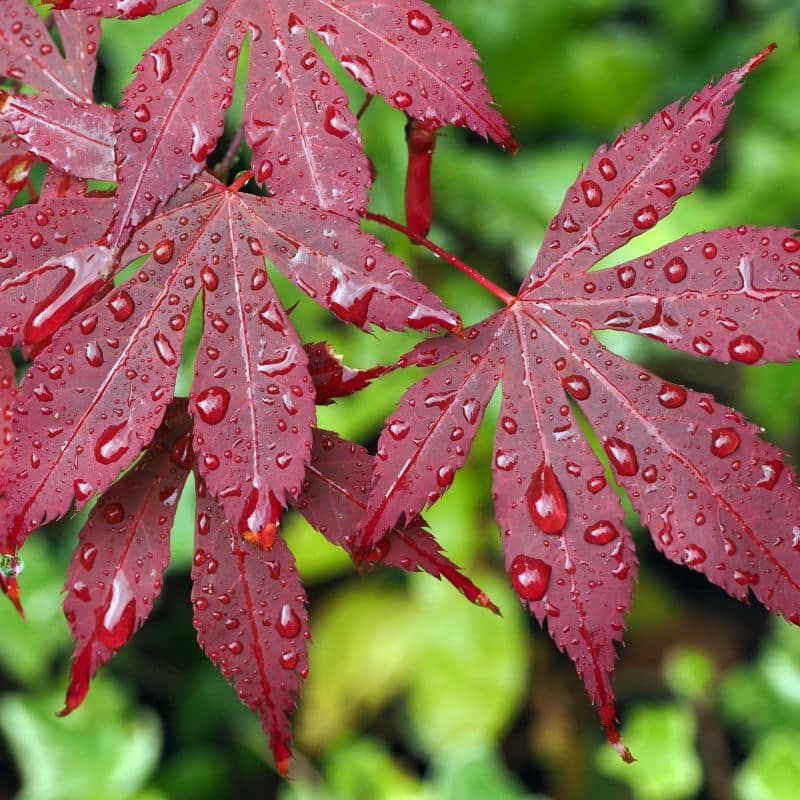
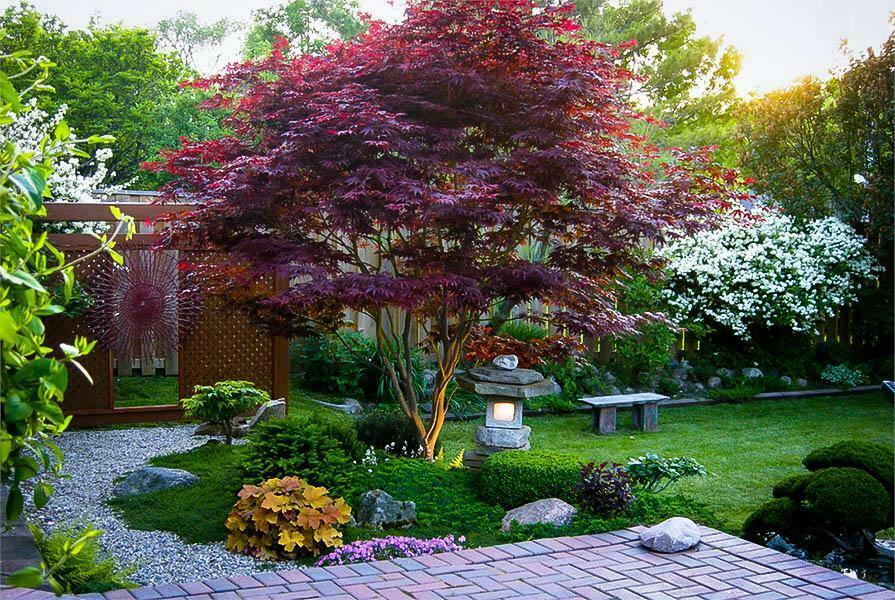
The Bloodgood maple is a popular plant for a few reasons. The shape and large size make it perfect for landscaping and the foliage on this plant changes colors depending on the time of year. In the summer, the leaves are a purple to burgundy color and in the winter the leaves can turn striking shades of red. The Bloodgood maple also produces tiny flowers and seeds. The flowers are light to medium purple and the seeds are a deep, rich red color.


This plant can reach up to 20 feet in height when it fully matures. The branches lean out and spread and they can grow to be as wide as they are tall. They are considered strong trees because they can handle cold winters. They are a hearty plant and they can survive even when temperatures go below zero. This makes them good for adding color to a lawn or garden area in the winter months.


Many people enjoy the Bloodgood maple because it is easy to grow and maintain. Some tips can help with growing this plant. Although it needs minimal care, things, like preparing the soil and placing the plant in the right area, can mean a more beautiful healthy tree.


You might want to fertilize the soil before planting a Bloodgood maple. Fertilizers that contain nitrogen are perfect for trees and shrubbery. They can help promote leaf growth and produce more blooms. It is best to fertilize the soil before you plant the tree. Mix the fertilizer with the soil and water the area. Wait a week before you plant your tree.


Keeping A Bloodgood Maple StumpBustersLLC stump removal
www.StumpBustersLLC.com

Find an area where you would like to place the tree. The plant loves direct sunlight but it also needs a certain amount of shading every day. The sunlight helps the plant produce blooms and seeds but the leaves can become wilted and shriveled if the plant receives too much direct light. The best place to put the plant would be in an area that has morning sunlight and afternoon shading. This gives the tree a perfect mix of both for a healthier plant.


When it comes to watering a younger Bloodgood maple, you will need to plant it on a hill. The roots can be damaged by over saturation and you will want the water to drain away from the roots. Another good idea would be to make a ring around the base of the tree. It should be around a foot away from the bottom of the tree and you can dig a small trench around the ring. Make it approximately 2 to 3 inches deep. Instead of watering the entire plant, you can fill the trench with water. This is a safe way to keep water away from the plant until it matures.


Keeping A Bloodgood Maple StumpBustersLLC stump removal full grown dwarf
www.StumpBustersLLC.com

You may have to stake the young tree if you live in a windy area. Use either a metal pole or stick of wood and place it a few inches behind the tree. Make sure the pole is stable and gather a few cotton cloth ribbons to tie the tree to the stake. Assemble the ties on the middle base of the tree and make sure the ties are loose enough for the plant to grow. Check the ties every day and loosen them as the tree grows. Eventually the tree will be able to stand up by itself and you can remove the stake.


If your Bloodgood maple is getting too big for the area, you can prune it. Cut the tips off of every branch that extends outward to make the tree smaller. The perfect time to do this is after the blooms and seeds start to fall from the tree.

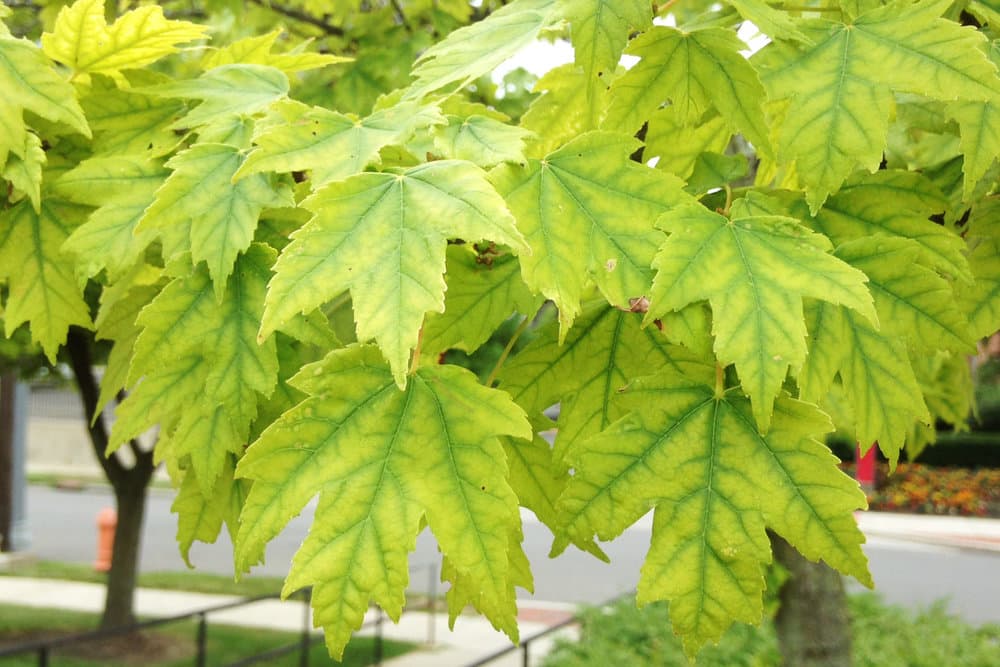
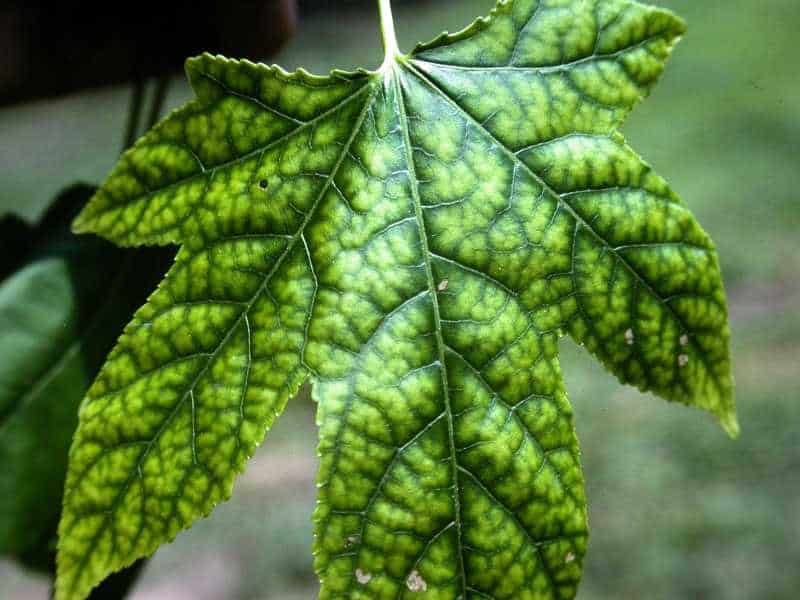
Chlorosis – Pale, Discolored Leaves

when a plant is chlorotic the leaves will be a pale green to a yellow or white
www.StumpBustersLLC.com

What you’ll see …when a plant is chlorotic the leaves will be a pale green to a yellow or white (in severe cases). To distinguish which type of chlorosis the plant is suffering from simply check the leaves. Iron chlorosis starts on the younger (outer) leaves, and then works its way to the older (inner) leaves. The opposite is true for manganese or zinc chlorosis where it starts on the older (inner) leaves then works its way towards the younger (outer) leaves.


The reason for the problem…there are several reasons for a plant to become chlorotic. One reason could be due to a lack of zinc; another could be a lack of manganese; however the most common is due to a lack of iron. Iron is the most important element for trees because it manages metabolism and respiration and is necessary for the formation of chlorophyll. This is responsible for a plant’s green color and its source of food and energy. Conditions, due to high soil ph, make it possible for other elements to interfere with the absorption of iron (iron can only be absorbed when soil ph, is between 5.0-6.5). Other elements if abundant that can tie up iron are calcium, copper, phosphorus, or the lack of potassium will reduce the availability of iron to the plant.


You should…keep the tree healthy and growing by: Properly watering your trees, avoid overwatering.


closeup Chlorosis
www.StumpBustersLLC.com

Performing a deep root fertilization using slow-release tree fertilizers combined with a bio-stimulant and Mycorrhizae. Bio-stimulants contain vitamins and hormones that will help aid in the plants recovery. Mycorrhizae contain a naturally occurring fungus that attaches itself to the root system and helps the roots to take in more water and nutrients. Another option is to inject micronutrients into the tree trunk. Of course, pruning plays a vital roll in this as well.

What You Need to Know About Stump Grinding

Stump grinder machines are used to take away the dead and dying tree roots from sidewalks, driveways, and roads without causing any damage t...